Women
Women
 Men
Men
 Kids
Kids


 Women
Women
 Men
Men
 Kids
Kids


Plenty of people know they need glasses without ever being clear on why. They know the number plate ahead is blurry, or that the menu has started drifting further from their face, and they know an optometrist wrote something on a card once. Whether they are short sighted or long sighted is a detail that never quite stuck.
It is worth understanding, because the two conditions are close to opposites, they show up at different stages of life, and they are corrected in different ways. Here is the plain version.
Short-sightedness, or myopia
If you are short sighted, close objects are clear and distant ones are not. The technical reason is that light entering your eye focuses slightly in front of the retina rather than on it, usually because the eyeball is a fraction longer than average or the cornea is a little too curved.
In practice it looks like this. You can read a book comfortably but struggle with road signs, the whiteboard, the television from across the room, or faces at the far end of a room. Myopia usually appears in childhood or the teenage years and tends to progress for a while before settling.
It is also becoming more common. Rates of myopia in children have been climbing internationally, and time spent outdoors appears to be one of the protective factors, which is part of why optometrists ask about it.
Long-sightedness, or hyperopia
Long-sightedness is the reverse. Light focuses slightly behind the retina, typically because the eyeball is a fraction shorter than average, and the result is that close work is harder than distance work.
Hyperopia is less obvious than myopia and often goes unnoticed for years, because younger eyes can compensate for it. The eye's focusing muscle simply works harder to pull near objects into focus. That effort is where the symptoms come from, and they are frequently mistaken for something else entirely.
- Tired or aching eyes after reading or screen work
- Headaches later in the day rather than in the morning
- Words that blur or swim after a while, then clear when you look up
- Children who avoid reading, or lose their place on the page
Because the eye compensates, a long sighted person can pass a basic distance vision check and still need correction. This is one reason a proper eye examination matters more than reading a chart on a wall.
Long-sightedness is not the same as presbyopia
This is the most common mix-up we hear. Presbyopia is the age-related loss of near focus that arrives for almost everyone from the early to mid forties. The lens inside the eye becomes less flexible, and reading distance starts creeping outwards.
The symptoms overlap with hyperopia, since both make close work harder, but the cause is different and so is the correction. Presbyopia is why reading glasses and multifocals exist. You can be short sighted and become presbyopic at the same time, which is exactly why some people in their fifties find themselves taking their glasses off to read.
Telling them apart in everyday life
A rough guide, and no substitute for an examination:
- Distance blurry, close clear, noticed in youth: likely myopia
- Close work tiring, distance fine, headaches after reading: possibly hyperopia
- Reading distance getting longer from your forties onward: likely presbyopia
- Blur at every distance, or vision that is worse in one eye: needs a look regardless
What your prescription actually says
If you have a prescription in a drawer, the numbers will tell you outright. The sphere value, listed as SPH, carries a sign. A minus figure indicates short-sightedness. A plus figure indicates long-sightedness. The number itself is measured in dioptres and describes the strength of correction required, so a reading of minus 4.00 is a stronger correction than minus 1.00.
You may also see a CYL value and an axis figure, which relate to astigmatism.
Astigmatism often sits alongside either one
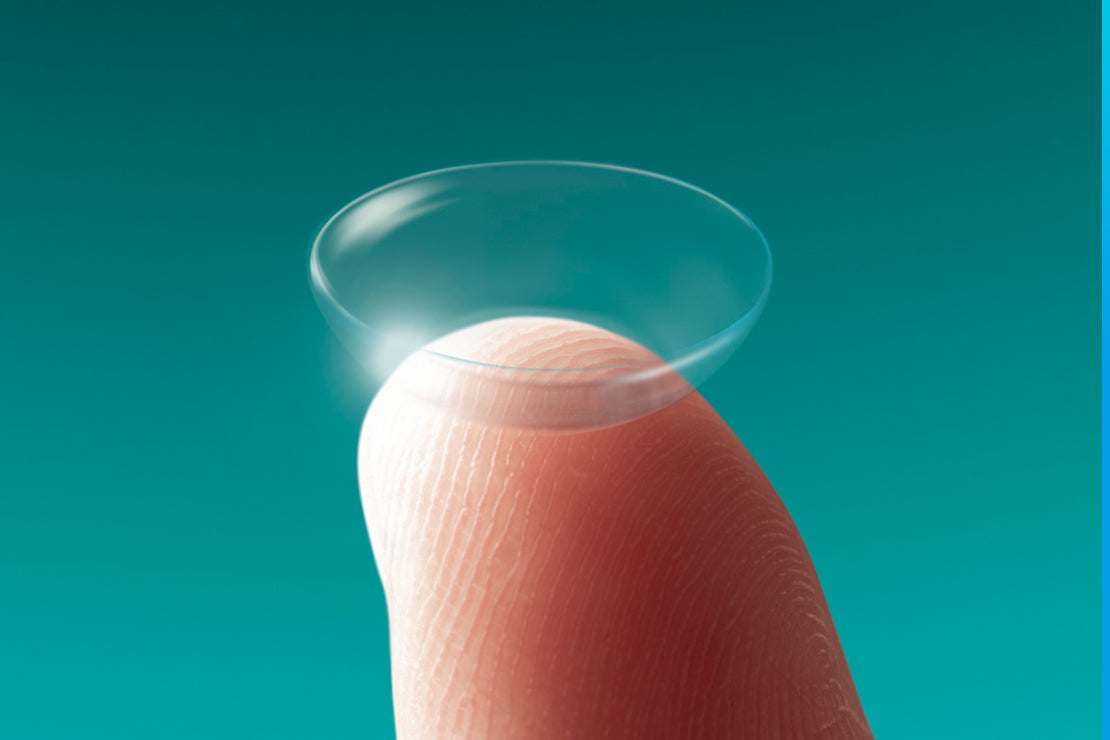
Astigmatism is not a third alternative to being short or long sighted. It describes an irregularly curved cornea or lens, which blurs vision at all distances and can sit alongside myopia or hyperopia in the same eye. It is corrected with a lens shaped to compensate, and in contact lenses these are called toric lenses.
What to do next
If any of the above sounds familiar and you have not had your eyes examined recently, that is the step. Optometry Australia recommends a routine examination roughly every two years for most adults, and more often for children, older adults, and anyone with diabetes or a family history of eye disease. We do not perform eye tests, so this is a visit to a local optometrist.
If you already hold a current prescription, you can order online from us and have it reviewed by an Australian optometrist or optical dispenser before it ships. Glasses start at $69 with the lenses included, and contact lenses are available across daily, fortnightly and monthly wear schedules. If you are new to lenses, our simple guide to contact lenses is a good starting point.

Have a current prescription?
Order online from $69 with lenses included, reviewed by an Australian optometrist before dispatch.
Shop Glasses