Women
Women
 Men
Men
 Kids
Kids


 Women
Women
 Men
Men
 Kids
Kids


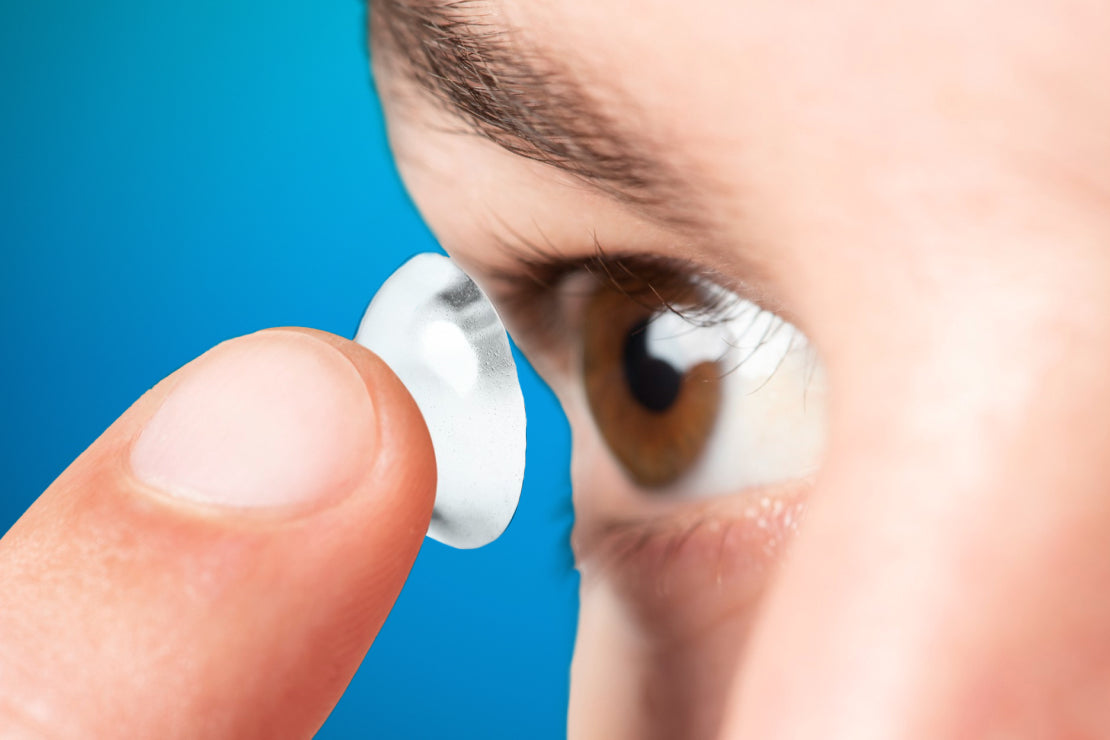
Contact lenses sit directly on the surface of your eye, which is one of the few parts of your body with no blood supply of its own. That is what makes good habits matter here in a way they do not with a pair of glasses. Almost every serious problem contact lens wearers run into traces back to one of a small number of avoidable habits.
None of this is complicated, and most of it becomes automatic within a fortnight. Here is what our optometrists want every wearer to know.
Start with your hands, every single time

Wash your hands with soap and water before you touch a lens, then dry them properly on a lint free towel. Anything left on your fingers goes onto the lens, and from the lens onto your eye, where it stays for as long as you are wearing it.
Two things worth knowing. Soaps containing moisturiser leave a residue that transfers straight to the lens and causes blurring, so use a plain one. And drying matters as much as washing, because damp hands and fluffy towels both leave fibres behind.
Keep your fingernails short if you can, or take extra care with the pads of your fingers rather than the tips when you handle a lens.
Water and contact lenses do not mix

This is the rule that surprises people most. Tap water in Australia is safe to drink, but it is not sterile. It can contain Acanthamoeba, a microorganism that is harmless in your stomach and dangerous on your eye. It can attach to a contact lens, and the infection it causes is rare, difficult to treat, and capable of permanently damaging sight.
So, no rinsing lenses under the tap. No storing them in water. No topping up a case with water when you have run out of solution. And no wearing lenses in the shower, in a pool, in the ocean, in a spa or in a lake.
If you swim regularly, speak to your optometrist about prescription goggles or wearing glasses on pool days. If lenses do get wet, take them out, discard them if they are dailies, and disinfect them properly if they are reusable.
Wear schedules are limits, not suggestions

Every lens is approved for a specific replacement schedule. A daily disposable is worn once and thrown away at the end of the day. A fortnightly lens is discarded after two weeks of wear. A monthly lens lasts a month from the day the packet is opened, whether or not you wore it every day in that time.
Stretching a lens past its date is a false economy. Protein and lipid deposits build up on the surface over the wear period, and the material itself becomes less able to pass oxygen through to the eye. What you notice is dryness, redness or blurring toward the end of the day. What you do not notice is the increased infection risk.
Daily wear hours matter too. Most people are comfortable in lenses for eight to twelve hours, and your optometrist will have given you a figure. Do not sleep in your lenses unless you have been prescribed a lens specifically approved for extended wear. Closed eyes cut the oxygen reaching the cornea, and overnight wear raises the risk of infection sharply.
Cleaning reusable lenses
If you wear fortnightly or monthly lenses, this is the daily routine.
- Take the lens out and rest it on a clean palm.
- Add a few drops of your multipurpose solution and rub the lens gently with a fingertip for about twenty seconds per side. The rubbing step removes far more debris than soaking alone, even when the bottle says no rub required.
- Rinse the lens with fresh solution.
- Put it in a clean case and fill the well with fresh solution to cover it.
Never reuse the solution sitting in the case from yesterday. Once a lens has been in it, its disinfecting power is spent. Tip it out and refill. Topping up rather than replacing is one of the most common causes of contact lens related infection.
Use the solution your optometrist recommended. Saline is a rinse and does not disinfect anything, and hydrogen peroxide systems must be fully neutralised in their own special case before the lens goes anywhere near your eye. If you are not sure which type you have, check with us or with your optometrist before you use it.
The case is the part everyone forgets

A lens case is a warm, damp container, which makes it an ideal home for bacteria. It needs looking after.
- Empty it out completely after every use. Do not leave old solution sitting in it.
- Rinse it with fresh solution, never with water.
- Leave it to air dry face down on a clean tissue, with the caps off.
- Replace it every three months, or immediately if it is cracked or you cannot get it properly clean.
Most solution packs include a new case for exactly this reason. Use them rather than saving them.
If you wear daily disposables
Dailies remove most of this routine, which is why many people choose them. Two rules still apply and both get broken regularly.
Never wear a daily lens for a second day, even if it feels fine and even if you only had it in for an hour. It has no protective coating designed for storage and it cannot be disinfected safely at home. And never store a daily in solution overnight to save it. If it comes out, it goes in the bin.
Makeup, sprays and everyday products
Put your lenses in before you apply makeup and take them out before you remove it. Choose products labelled as suitable for contact lens wearers where you can, and avoid powder eyeshadows and oil based removers close to the lash line.
Hairspray, deodorant and perfume are all worth applying before your lenses go in, or with your eyes closed and turned away.
When to stop and get your eyes checked

Take your lenses out and leave them out if you notice any of the following.
- Redness that does not settle shortly after removing the lens
- Pain, or a persistent feeling that something is in your eye
- Blurred vision that does not clear
- Unusual sensitivity to light
- Watering or discharge
These symptoms can point to an infection or an abrasion, and both are treatable when caught early. Do not put a fresh lens in to see whether it feels better. See an optometrist or a doctor, and take your lenses and case with you, because they help with diagnosis.
Keep a pair of glasses with a current prescription at home for days when your eyes need a break. Every wearer needs one eventually.
Time to restock?
Contact lenses from Australian suppliers, checked by our optometrists before dispatch.
Shop Contact Lenses