Women
 Men
 Kids


 Women
 Men
 Kids


Astigmatism has an intimidating name and a fairly simple explanation. It is also one of the most common reasons a prescription looks more complicated than a friend's, and one of the most common reasons people are told they cannot wear contact lenses, which is usually out of date advice.
Here is what it is, how it feels, and how it is corrected in both glasses and contact lenses.
What astigmatism actually is
A healthy eye focuses light to a single point on the retina. That relies on the cornea, the clear front surface of the eye, being evenly curved in every direction. The usual comparison is a football versus a rugby ball. A football curves the same way whichever direction you turn it. A rugby ball is steeper along one axis than the other.
With astigmatism, the cornea, or sometimes the lens inside the eye, is shaped more like the rugby ball. Light entering along one axis focuses at a slightly different point from light entering along the other, so there is no single sharp focal point. The result is blur or distortion, and it does not resolve by moving closer or further away.
It is very common, it is usually present from early life, and it often changes only gradually. Having it says nothing about the health of your eyes.
Astigmatism is not an alternative to being short or long sighted
This is the part that confuses people. Astigmatism is not a third category alongside myopia and hyperopia. It sits alongside either of them, in the same eye, and most people who have it also have some degree of short or long sightedness. If you are unclear on those two, our guide to short-sightedness and long-sightedness covers the difference.
What it feels like day to day
Because the blur is directional rather than distance-based, the symptoms are distinctive:
- Blur or a smeared quality at every distance, not just near or far
- Letters or lines that appear to have a shadow or double edge
- Streaking around headlights and streetlights at night
- Eye strain or headaches after sustained focus, from the eye trying to compensate
- Tilting your head slightly without noticing, to line up the clearer axis
Mild astigmatism often goes uncorrected without much consequence. Moderate to higher amounts are worth correcting properly, because the strain of compensating is doing quiet work all day.
How to spot it on your prescription
Your prescription will show it plainly. Alongside the SPH value, which describes short or long sightedness, you will see two more figures:
- CYL, or cylinder. The amount of astigmatic correction required. A blank or zero here means none was prescribed.
- Axis. A number between 1 and 180 describing the orientation of the correction, in degrees. It is not a strength, it is a direction.
Both eyes are listed separately, and the values are frequently different between them. That is normal.
How astigmatism is corrected in glasses
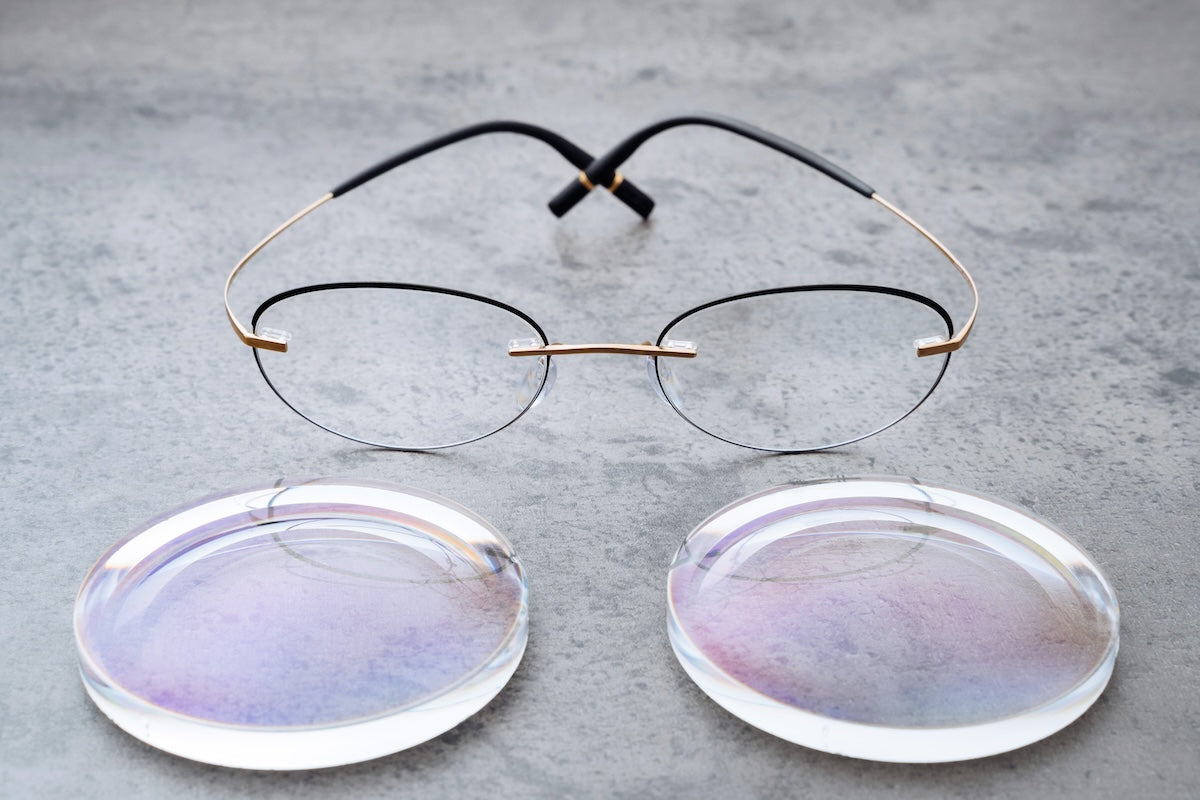
Spectacle lenses correct it by being shaped to compensate for the uneven curve, with the correction oriented along the axis on your prescription. Because a pair of glasses sits in a fixed position on your face, the lens stays aligned with the axis without any complication. This is why glasses are the simpler of the two options for astigmatism.
It also means the lenses must be glazed accurately and positioned correctly in the frame, which is a manufacturing matter rather than something you need to manage. Every order we dispatch is reviewed by a qualified Australian optometrist or optical dispenser beforehand, and the prescription values including cylinder and axis are checked as part of that.
How astigmatism is corrected in contact lenses
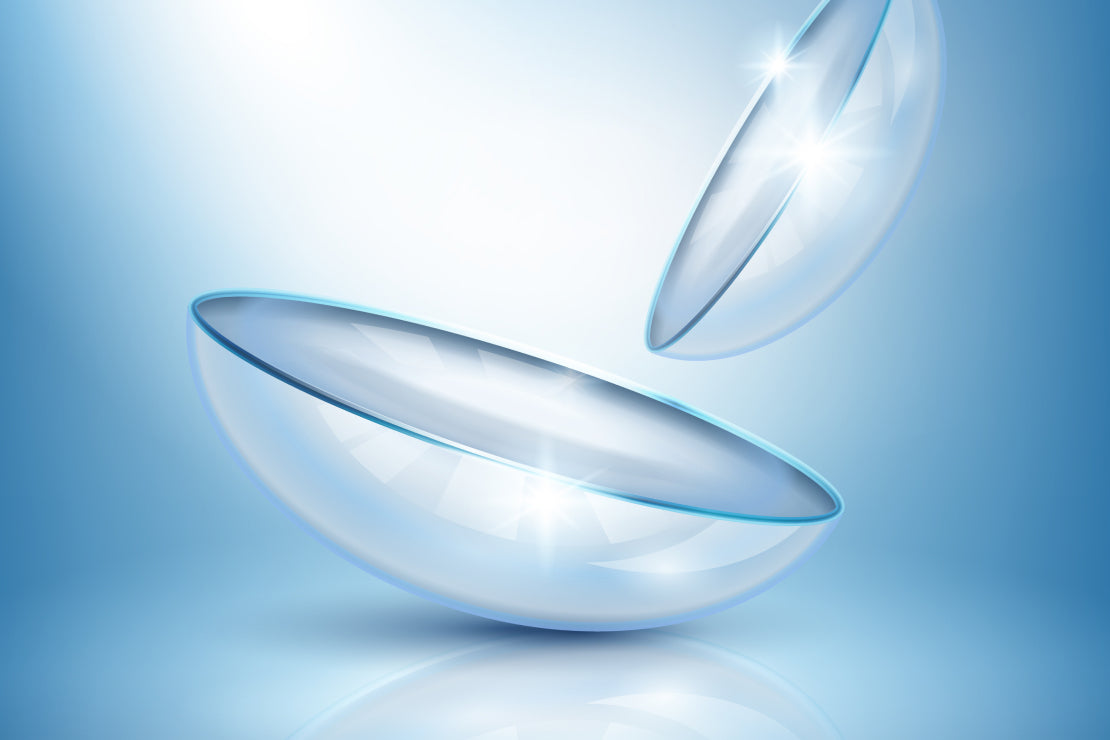
This is where toric lenses come in. A standard contact lens can rotate freely on the eye, which would send an astigmatic correction out of alignment every time you blinked. Toric lenses are weighted or shaped so they settle into a consistent orientation and stay there.
The practical implications:
- Fitting matters more than with a standard lens, so a proper contact lens fitting with an optometrist is important
- They are available in daily, fortnightly and monthly wear schedules
- Vision can fluctuate briefly after a blink while the lens resettles, which usually stops being noticeable
Not every retailer stocks toric lenses, which is where the idea that astigmatism rules out contacts tends to come from. We do carry them. If you are new to lenses generally, our simple guide to contact lenses is worth reading first.
The short version
- Astigmatism is an unevenly curved cornea, not a disease.
- It sits alongside short or long sightedness rather than replacing it.
- Look for CYL and axis values on your prescription.
- Glasses correct it simply, because the lens cannot rotate.
- Contact lenses correct it with toric lenses, which need a proper fitting.
Astigmatism in your prescription?
Glasses from $69 with the lenses included, and toric contact lenses across daily, fortnightly and monthly wear.
Shop Toric Lenses